
English | Tiếng Việt
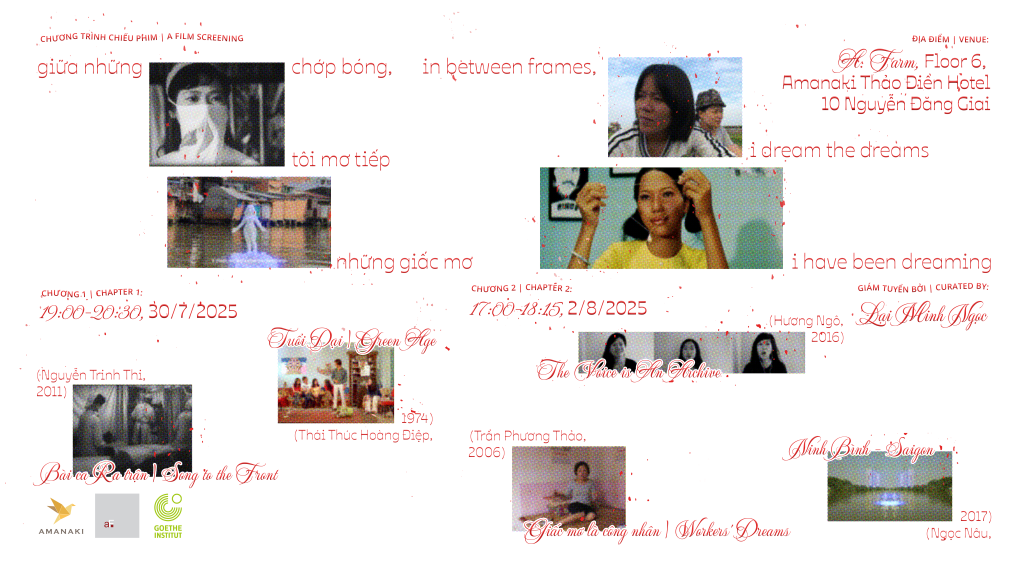
𝒾𝓃 𝒷𝑒𝓉𝓌𝑒𝑒𝓃 𝒻𝓇𝒶𝓂𝑒𝓈, 𝒾 𝒹𝓇𝑒𝒶𝓂 𝓉𝒽𝑒 𝒹𝓇𝑒𝒶𝓂𝓈 𝒾 𝒽𝒶𝓋𝑒 𝒷𝑒𝑒𝓃 𝒹𝓇𝑒𝒶𝓂𝒾𝓃𝑔 is a two-part screening programme curated by Lại Minh Ngọc in reponse to “𝟨 𝒫𝑀 𝒾𝓃 𝓉𝒽𝑒 𝒶𝒻𝓉𝑒𝓇𝓃𝑜𝑜𝓃. 𝒯𝒽𝑒 𝒹𝒶𝓎 𝓌𝒶𝓈 𝓁𝑜𝓃𝑔. 𝒯𝒽𝑒 𝓃𝒾𝑔𝒽𝓉 𝓉𝑜𝑜 𝓌𝒶𝓈 𝓁𝑜𝓃𝑔. 𝐼 𝓌𝒶𝓈 𝒶𝓁𝓌𝒶𝓎𝓈 𝒾𝓃 𝓉𝒽𝑒 𝓅𝒶𝓈𝓉:..”, a duo exhibition by Tâm Đỗ and Lê Đ. Chung.
The screening takes a personal turn with moving image works and films that portray from seemingly traditional concepts to unconventional ideas of Vietnamese womanhood—The Virgin Mary opening her mythical arms to welcome migrants from Ninh Bình to Saigon in promise of a new land; a nurse veiling her face while treating a patient in the jungle, her mesmerizing gaze leaving viewers uncertain whether she’s the protagonist or antagonist of fragmented montages of a propaganda film; young girls finding themselves in 1970s Saigon through music, love, and stimulants…. As the frames flip, the girls lean on their dreams, where they liberate themselves from the framings. In so doing, the programme questions the representation of female figures in Vietnamese cinema, which often places them in the moral confinement of “tam tòng, tứ đức” (or, “three obediences and four virtues”). A legacy of Confucious teaching, a woman is expected to obey their father, husband and son, and to have diligence, modest appearance, proper speech, and morality, implying their existence as an embodiment of the nation, the traditional value through the male gaze. As seen across many filmic productions, a woman is there, yet she never truly exists.
𝓔𝓿𝓮𝓷𝓽 𝓭𝓮𝓽𝓪𝓲𝓵𝓼
💠 Time: 7:00 PM – 8:30 PM, Wednesday, 30/7/2025 & 05:00 PM – 06:15 PM, Saturday, 2/8/2025
💠 Location: Floor 6, Amanaki Hotel Thảo Điền, 10 Nguyễn Đăng Giai
💠 Free entrance
💠 Language: Vietnamese, with English subtitle
💠 RSVP: https://forms.gle/8Dep6sdH6hQoGfgB9
*Due to limitation of the space, the form will receive no more than 30 registration
𝓐𝓫𝓸𝓾𝓽 𝓽𝓱𝓮 𝓬𝓾𝓻𝓪𝓽𝓸𝓻
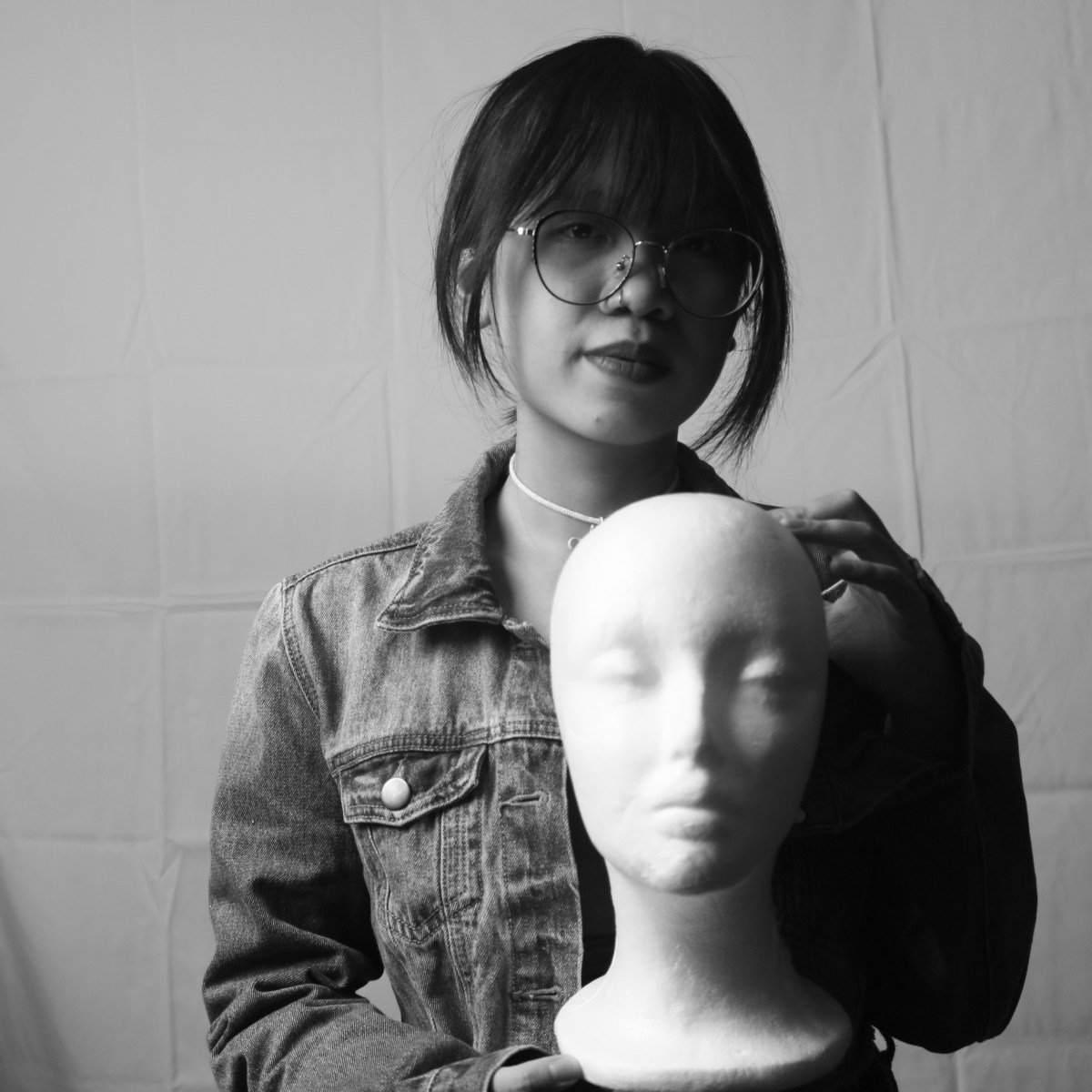
Lại Minh Ngọc was born in Hanoi and is currently based in Saigon, Vietnam. Freshly graduated in Social Studies and Art & Media Studies at Fulbright University Vietnam, she is taking small steps in practicing photography, documentary film, ethnographic film, and curation. Ngọc views artistic practices as a multidimensional approach to social research, especially issues and representation of sex and gender woven within the changing of urban space.
𝒾𝓃 𝒷𝑒𝓉𝓌𝑒𝑒𝓃 𝒻𝓇𝒶𝓂𝑒𝓈, 𝒾 𝒹𝓇𝑒𝒶𝓂 𝓉𝒽𝑒 𝒹𝓇𝑒𝒶𝓂𝓈 𝒾 𝒽𝒶𝓋𝑒 𝒷𝑒𝑒𝓃 𝒹𝓇𝑒𝒶𝓂𝒾𝓃𝑔
chapter 1: 7:00 PM – 8:30 PM, Wednesday, 30/7/2025
chapter 1 follows the dreams of female characters who try to navigate their lives under the requirement of sacrificing for others, or “tam tòng” (“three obediences”), and here in most of the films, “tòng quân” (military enlistment). “Green Age” (Thái Thúc Hoàng Điệp, 1974) brings back the dynamics of the 1970s in Saigon, where girls fulfill their own desire in the life besides wartime. The chapter ends with “Song to the Front” (Nguyễn Trinh Thi, 2011), in which the artist reconstructs a propaganda film footage into a thriller featuring the woman as the antagonist/protagonist.
chapter 2: 05:00 PM – 06:15 PM, Saturday, 2/8/2025
In the second chapter, the screening follows films and video works in which women and female bodies blend in, exist, and witness the movement of rapid changes in landscape and throughout generations. In “The Voice is An Archive” (Hương Ngô, 2016), four generations of Vietnamese diaspora connect through language and identity by humming a lullaby repeatedly. This is then followed by “Worker’s Dream” (Trần Phương Thảo, 2006), a documentary that captures the reality of female workers as they search for a new life in the city. This chapter ends with “Ninh Bình – Saigon” (Ngọc Nâu, 2017), when the female figure only appears as mythical figures found in legends of migration.
𝓐𝓫𝓸𝓾𝓽 𝓽𝓱𝓮 𝓯𝓲𝓵𝓶𝓼 & 𝓪𝓻𝓽𝓲𝓼𝓽𝓼/𝓭𝓲𝓻𝓮𝓬𝓽𝓸𝓻𝓼

Nguyễn Trinh Thi, 2011, 00:05:13
Song to the Front abstracts a feature-length 1970s Vietnamese war propaganda film and its aesthetic and political elements into a 5-minute vignette. Set to Stravinsky’s The Rite of Spring, which represented a sacred pagan ritual in pre-Christian Russia where a young girl dances herself to death to propitiate the god of Spring, Song to the Front deconstructs the melodramatic and romanticized elements of the original social-realist drama. Playing with the original plot line in an ambiguous manner, the filmmaker desires an imaginative space for the viewer’s reinterpretation of the historical event and perspective.
Nguyen Trinh Thi is a Hanoi-based filmmaker and artist. Traversing boundaries between film and video art, installation and performance, her practice currently explores the power of sound and listening, and the multiple relations between image, sound, and space, with ongoing interests in history, memory, representation, ecology, and the unknown.
Nguyen’s works have been shown at international festivals and exhibitions including documenta, Artes Mundi, Lyon Biennale, the Asia Pacific Triennale of Contemporary Art, Sydney Biennale, the Mori Art Museum, and Fukuoka Asian Art Triennial.

Thái Thúc Hoàng Điệp, 1974, 1:15:53
Set against the vibrant yet turbulent backdrop of Saigon in the final years of the Vietnam War, at a time when most Vietnamese films focused on war themes, Green Age tells a love triangle story while weaving in pressing youth issues of the era: drug abuse, premarital sex, abortion, and suicide—all heavily influenced by Western cultural movements. The film centers on a volatile love triangle between Dzũng—the charismatic leader of a rock band—his free-spirited fiancée Linh, and his gentle best friend Ngọc.
More than a dramatic love story, Green Age captures the essence of Saigon’s youth culture in the 1970s—rock music, underground vice, and the clash between tradition and modernity. Filmed in vivid Eastmancolor, it showcases locales for youth in the 70s such as the Phở Xe Tăng alley and the competition of Youth Music. Weaving into the diasporic journey of the director, the film later resurfaced as a cult classic, celebrated for its raw portrayal of a generation caught between war and hedonism, idealism and recklessness.
Thái Thúc Hoàng Điệp is an Australian-Vietnamese film director of South Vietnamese cinema in the 1960s and 1970s. Emerging in Saigon during wartime, his interest was set on the youth and their daily life, exploring the complex transformation of urban citizens in a chaotic time instead of representing the violence of war. His works encapsulate the subtlety of feelings and ideologies that are often being lost due to grand narratives of power and war.

Ngọc Nâu, 2017, 00:05:00
Ngoc Nau’s work is inspired by a story which was told by a male immigrant on the Sai Gon river. The story is relevant to the life story of her grandfather on her mother’s side, where he had to migrate from his hometown–Ninh Binh–due to the farmland reformation that happened in Northern Vietnam in 1953. The migration event occurred in 1954. When the Geneva Agreement was signed, Vietnam was divided into two regions: The North and the South, and consequently, the inhabitants from each region had 300 days to migrate. The propagandas such as “God migrated to the South”, and “Migrating to the South for freedom” encouraged almost one million people, who are originating from Ninh Binh and many other Northern provinces, to migrate to the South for the sake of religion’s freedom.
With the majority of materials being collected in Ninh Binh, Ngoc Nau’s work was made from found footage videos and found images, which were found from historical archives, music videos, religious practices, and Hollywood movies on lands and people.
The fictional character was inspired by Mary, Mother of Jesus. As she is extending her arms to welcome floating figures on Saion river, which implies the migration approach of this religious community. The work aims to seek evidence that evokes feelings about the home of migrants. While these people are facing the challenge of adapting to the rapid change of new living place, do they recognize and what do they think about the dramatic change of their hometown under the influence of the entertainment industry? Would their hometown be something familiar when they are back?
Ngọc Nâu is based in northern Vietnam. Through her work, she delves into social issues that are intertwined with technological progress – spirituality, land transformation and labor conditions – using these to reflect on the future, collective memory, and the human experience. Ngọc Nâu invites audiences to reconsider these narratives and engage in a dialogue about the complexities of contemporary existence. Ngọc Nâu’s works have been presented at: Hypnotising Chickens: Recent Video Art from Vietnam and Tasmania, Contemporary Art Tasmania, Australia, (2025); Ecological Art from Beneath, Gangwon International Triennale, South Korea (2024); Art Basel, Hong Kong (2023), Documenta15, Germany through SaSa art projects collective (2022); ThaiLand Biennale (2021), and Singapore Biennale (2019).
Hương Ngô, 2016, 00:06:00
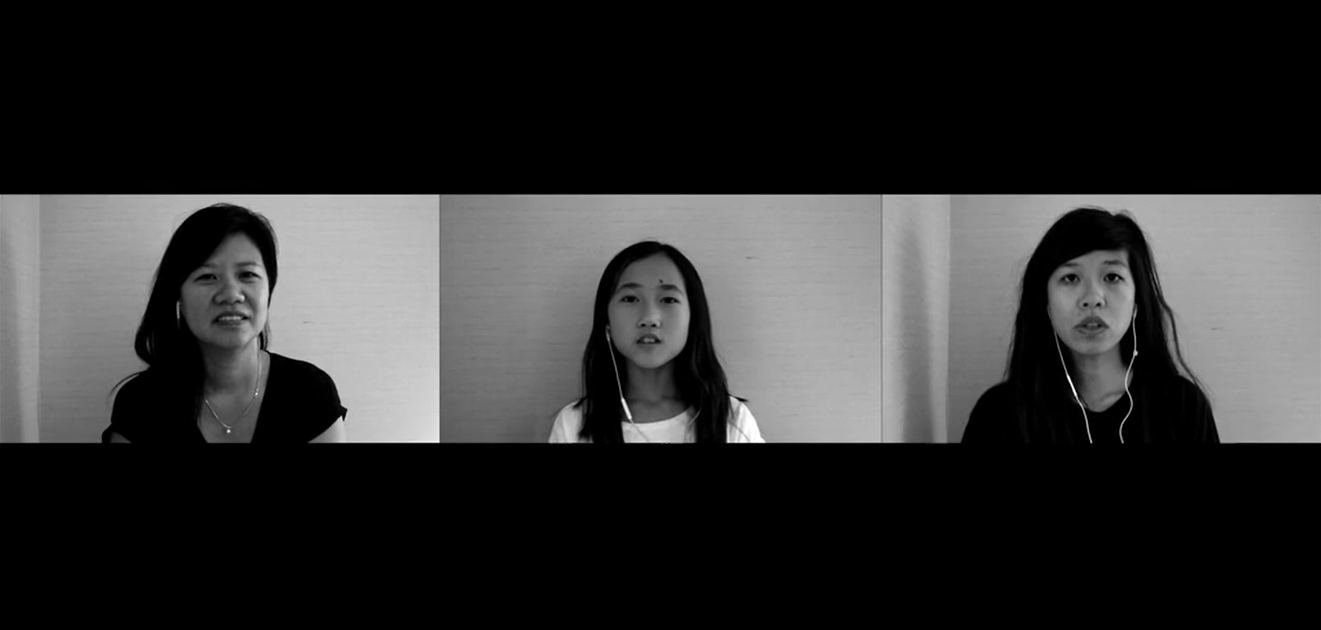
With Phương Mai Nguyễn, Hồng Ngô, Phoenix Chen, and Hương Ngô
Documentation of a performance in which Ngô, her niece, and her sister are attempting to replicate a recording of her mother’s singing. The title proposes a reimagining of something as bodily and temporal as the voice to carry the weight of history, culture, and information as an historical archive. It is also a reclaiming of the imperfect, non-fluent, and incomplete as a body of knowledge of importance and interest.
Hương Ngô is an interdisciplinary artist and educator. She was born in Hong Kong, holds an MFA from the School of the Art Institute of Chicago in Art & Technology Studies (2004), and was a Whitney Independent Study Fellow (2011-2012). She was awarded the Fulbright U.S. Scholar Grant in Vietnam (2016) for work that has been described as “deftly and defiantly decolonial” by New City and “what intersectional feminist art looks like” by the Chicago Tribune.
She has exhibited her solo and collaborative work at numerous institutions including more recently: Fine Arts Center at Colorado College, Colorado Springs, CO (2024); MASS MoCA, North Adams, MA (2023); Kemper Museum, Kansas City, MO (2022), CAC Cincinatti, OH (2021); Chicago Cultural Center, Chicago, IL (2021); Museum of Contemporary Art, Chicago, IL (2020); The Factory Contemporary Art Centre, HCMC, VN (2020); Renaissance Society, Chicago, IL (2020); Phillips Collection, Washington DC (2019); MoMA, New York, NY (2018); Para Site, Hong Kong, SAR (2017); DePaul Art Museum, Chicago, IL (2017); Nhà Sàn Collective, Hanoi, VN (2016). Her collaboration with Hồng-Ân Trương is on long-term display at Chicago O’Hare’s International Airport, and her solo work is part of the permanent collections of the MoMA, DePaul Art Museum, Smith College Museum of Art, and Walker Art Center, among others. She was part of the Prague Biennial (2005) and Prospect.5 Triennial (2021).
She is currently a visiting lecturer at University of California Santa Barbara. She was recently an assistant professor of Contemporary Practices at the School of the Art Institute of Chicago, where she helped to institute the school’s first department-wide anti-racism committee. While living in France, she organized a series of artist lectures, UJVF Rencontre, in collaboration with Liem Binh Luong Nguyen and in cooperation with WoMA Paris.
Trần Phương Thảo, 2006, 00:52:00
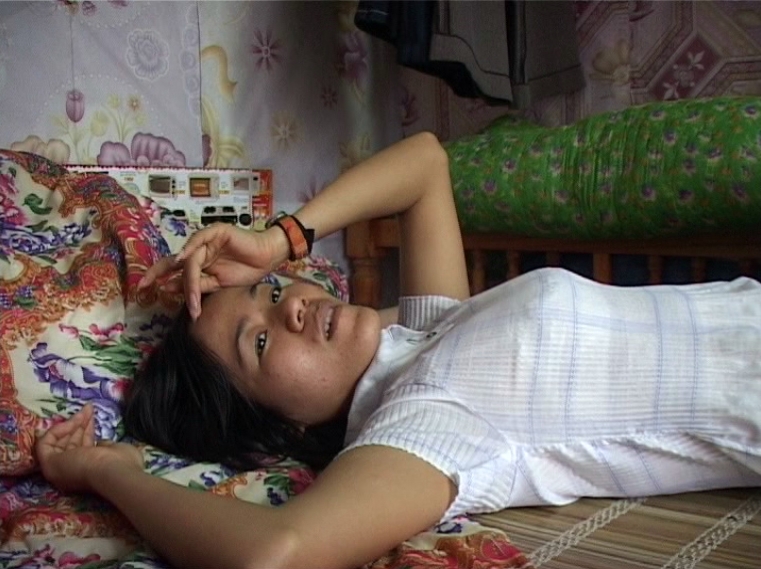
In the Japanese industrial zone in Hà Nội, Workers’ Dreams follows young women who have left their village struggling to escape temporary work and short-term contracts. Becoming a real worker is a dream, which should be a source of pride and a guarantee of dignity.
Tran Phuong Thao (b. 1977, Hanoi, Vietnam) moved to France in 2000 to complete her dream of being a documentary filmmaker. After graduating in Political Science in Paris, she studied documentary film techniques and writing in Poitiers University. Back in Vietnam, she took part in the Varan Vietnam workshop where she directed “Workers Dream” which attended many international festivals and was awarded at Cinéma du Réel 2007 (P. Perrault Award).
Since 2011, she directed several documentary films in collaboration with Swann Dubus including “With or Without Me” (White Goose Award – DMZ Docs 2012) and “Finding Phong” (Grand Prix Nanook – Jean Rouch IFF 2016, Paris). Together they are exploring through their films major themes of Vietnamese society from a personal angle and producing young talented Vietnamese documentary filmmakers including Ha Le Diem’s debut feature film “Children of the Mist”. She supervises Varan Vietnam production company and is the head teacher in Varan Vietnam’s workshops.


 MoT+++